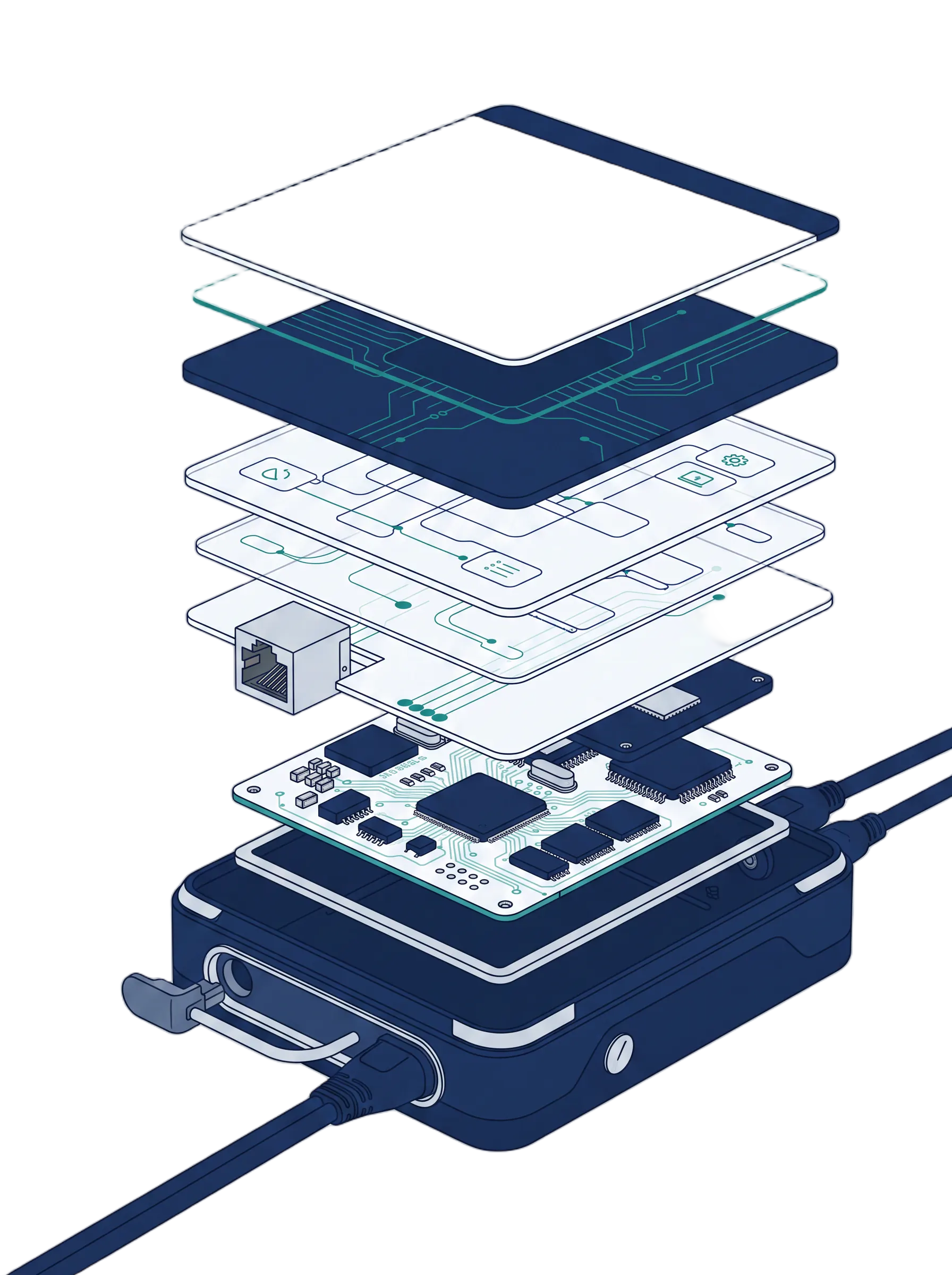
Surgical robotics cybersecurity, ready for FDA review

Encryption design, key management and provisioning across multiple devices are where surgical robotics submissions get uncertain. Medcrypt pairs former FDA reviewers with security architecture work to clarify what FDA expects before you file.

Where surgical robotics cybersecurity gets hard

  1. Unclear FDA expectations for encryption
  2. Several devices, different stacks
  3. Provisioning with little or no connectivity
  4. Gray market attachments

Where surgical robotics cybersecurity gets hard

  • Unclear FDA expectations for encryption

    Teams can invest heavily in cryptographic design and still lack clear guidance on documentation, key management and acceptable cryptographic implementations.

  • Several devices, different stacks

    A surgical tool suite can combine devices built in-house and by third parties, each with its own technology stack and manufacturing environment.

  • Provisioning with little or no connectivity

    Devices that run in disconnected environments still need secure provisioning, both in the field and during manufacturing, without breaking FDA clearances.

  • Gray market attachments

    Accessories need authentication to block unauthorized attachments, all within strict performance limits.

Where attackers get in

  1. Hospital network & updatesHow software reaches the system

  2. Surgeon consoleUser access and sessions

  3. Robot controllerCommands to the arm

  4. Instruments & attachmentsGenuine vs. gray market

  5. ProvisioningKeys set up with little or no connectivity

How an engagement works

  1. 1

    Gap check

    Know where your surgical robotics submission stands, starting with a 1‑hour review.

  2. 2

    Build the evidence

    Threat model, SBOM, architecture views and testing, sized to your device.

  3. 3

    Reviewer check

    Former FDA reviewers go through the package before you file.

  4. 4

    After you file

    If FDA sends questions, we typically turn around a full cybersecurity response in about 10 days.

Start with a gap check

Case studies

In 2022, three surgical robotics companies selected Medcrypt to secure their systems.

Read the announcement(opens in a new tab)
“We didn't know how much the FDA needed from us; Medcrypt made that much more clear.”

Multinational surgical robotics company

Standards we work to

  • FDA premarket cybersecurity guidancewhat reviewers check
  • Section 524Bthe law for cyber devices
  • ISO 14971safety risk management
  • IEC 62304software lifecycle
  • IEC 81001-5-1secure development
  • AAMI TIR57security risk management

FAQ

Section 524B applies to cyber devices: devices that include software validated, installed, or authorized by the manufacturer, have the ability to connect to the internet, and could be vulnerable to cybersecurity threats. The test is whether the device is capable of connecting, not only whether its intended use involves connecting.

In Medcrypt's surgical robotics work, the open questions were documentation requirements, key management protocols and acceptable cryptographic implementations. Former FDA reviewers clarified those expectations through encryption architecture reviews and threat modeling workshops, then identified improvements to the cryptographic implementation and submission materials before FDA review.

FDA now enforces completeness through eSTAR, which is required for 510(k) submissions. There is no separate cybersecurity refuse-to-accept review; eSTAR itself is the gatekeeper. Gaps found during substantive review lead to an additional-information request that puts the 510(k) on hold until you respond. Each extra round adds review time, so a complete first submission is usually the fastest path to clearance.

Planning a surgical robotics submission?

Talk to Medcrypt about your encryption architecture, threat model and FDA readiness.

Talk to an expert